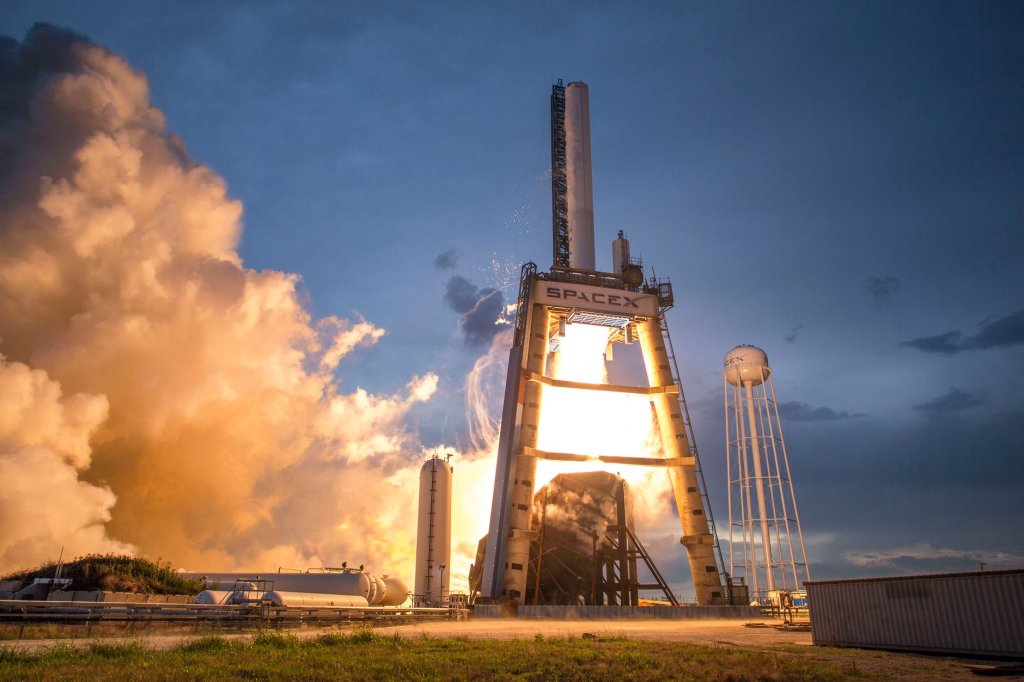
Bottom line: SpaceX has bought $329 million worth of Tesla Megapack batteries so far this year to power xAI’s data centers, Elon Musk now spends roughly half of every Tesla earnings call talking about AI and robotics instead of cars, and The Verge reports SpaceX generated more revenue as an AI company than as a space company last quarter — while still losing money overall. Three separate data points, one direction: Musk’s companies are functioning as a single AI infrastructure operation wearing three different tickers. Here is what that consolidation means if you’re evaluating any Musk-affiliated AI product.
The Money: SpaceX Is Bankrolling xAI’s Power Bill
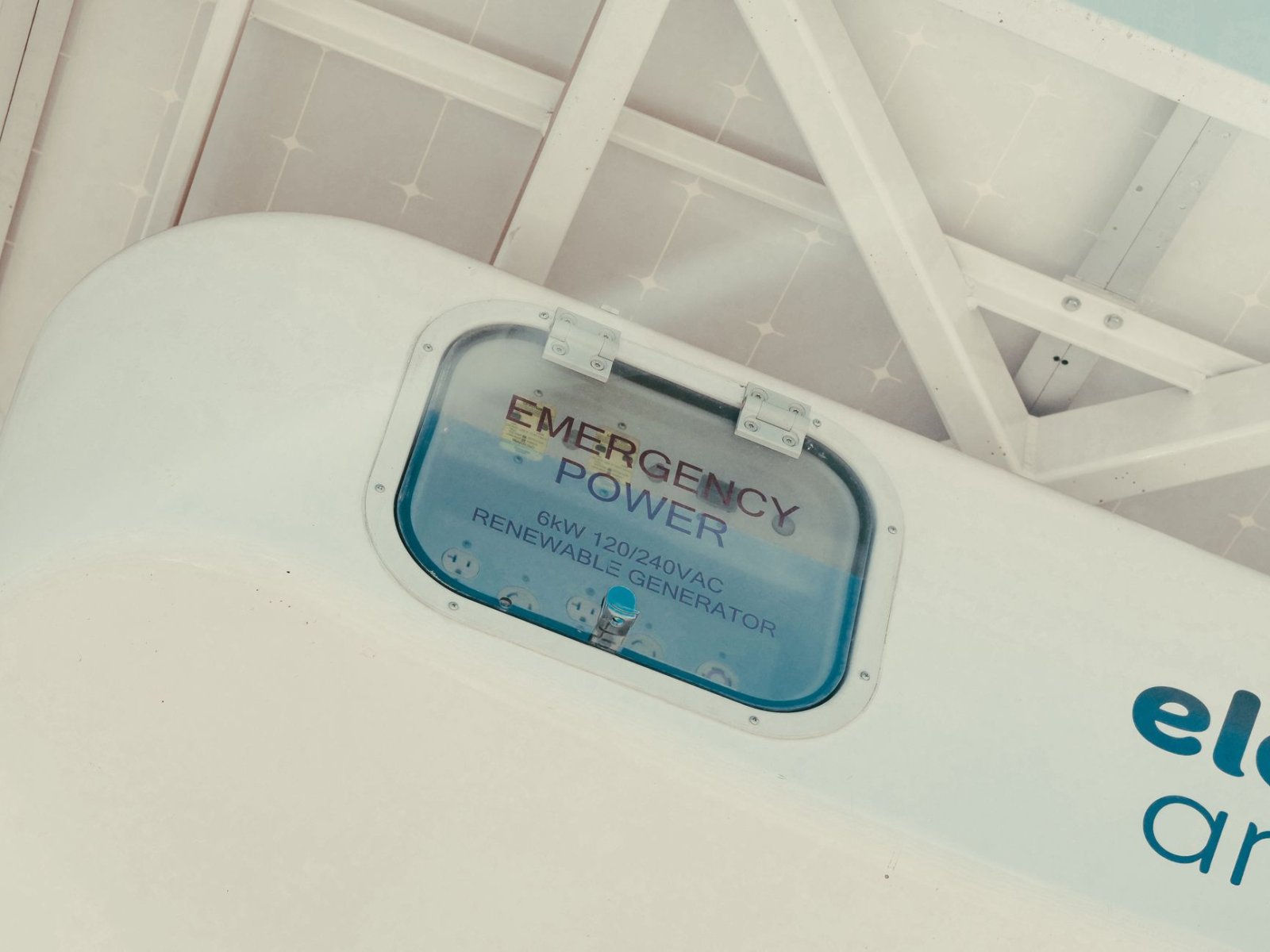
SpaceX spent $295 million on Tesla Megapack battery storage in the second quarter of 2026 and $329 million so far this year, according to the company’s earnings report reviewed by TechCrunch. Before xAI folded into SpaceX earlier this year, xAI had separately bought $430 million worth of Megapacks for its own data centers, up from just $34 million in the first quarter. SpaceX also disclosed $131 million in Tesla Cybertruck purchases at manufacturer’s suggested retail price as of December 2025, per its regulatory filing.
The batteries are not incidental. xAI has leaned on natural gas turbines — including dozens of unpermitted units at its Mississippi site near the Colossus data center — but AI training and inference draw power in sharp, unpredictable spikes rather than a steady load. Megapacks smooth those spikes, delivering backup power in under a second and absorbing demand surges that would otherwise trigger utility penalty charges or overwhelm on-site generators. In effect, one Musk company (SpaceX) is now the largest disclosed buyer of another Musk company’s (Tesla’s) grid-storage hardware, to run a third Musk company’s (xAI’s) compute — a closed loop of capital that never has to clear an outside investor’s due diligence the way a normal vendor contract would.
Why the Battery Number Matters More Than It Looks
$329 million in battery purchases alone, in seven months, is a bigger single-category infrastructure line item than many AI startups raise in a full funding round. It is also accelerating: xAI’s own pre-merger Megapack spend went from $34 million in Q1 to $430 million within about a year, roughly a twelvefold increase. If SpaceX’s post-merger run rate follows a similar curve, the battery bill alone could exceed half a billion dollars by year end — before counting the natural gas turbines, the Nvidia GPUs, or the data center buildings themselves.
The Attention: Musk’s Earnings Calls Have Quietly Stopped Being About Cars
Tesla shipped nearly half a million vehicles last quarter and still drew 70% of its revenue from car sales. None of that shows up in how Musk talks about the company anymore. TechCrunch worked with financial research firm Hudson Labs to analyze every Tesla earnings call transcript back to 2019, sourced from S&P Market Intelligence, using an AI research tool to tag what topic each sentence covered. The result, per TechCrunch’s analysis: Musk now spends close to 50% of his speaking time on AI, robotaxis, and Full Self-Driving, up from 15% to 20% in 2022.
Musk has been explicit that this is the point. “If you value Tesla as just an auto company — fundamentally, it’s the wrong framework,” he said on Tesla’s Q1 2024 earnings call. “If somebody doesn’t believe Tesla is going to solve autonomy, I think they should not be an investor in the company.” Three years later, the earnings-call data shows that framing is not just messaging — it is where the company’s leadership actually spends its attention, even as the revenue mix has not caught up. A car company that spends half its public commentary on AI is asking investors and customers alike to value it on a roadmap, not a balance sheet.
The Revenue Claim: AI Ahead of Space, on Paper
SpaceX generated more revenue as an AI company than as a space company last quarter, The Verge reported, while noting the combined entity is still losing money overall. The claim lines up with the pattern in the Megapack and earnings-call data: SpaceX’s traditional launch and Starlink businesses are being reported alongside, and apparently now outpaced by, the AI compute business it absorbed when xAI merged into it earlier this year. Neither SpaceX nor Tesla has published a line-item breakdown confirming the exact revenue split, so treat the claim as directionally accurate rather than audited.
The “still losing money overall” qualifier is worth sitting with. A company can be revenue-led by AI and still be cash-negative if that AI business is capital-intensive — which xAI plainly is, given the battery, turbine, and GPU spend described above. Revenue leadership and profitability are different claims, and only one of them has been made here.
What This Means If You Use or Evaluate Musk-Affiliated AI Tools
Grok and xAI products are now capital-constrained by three companies at once, not one
xAI’s compute buildout is being financed through SpaceX capital and Tesla hardware purchases rather than a clean AI-specific balance sheet. If you’re comparing Grok against other assistants, factor in that its infrastructure funding depends on SpaceX’s launch cadence and Tesla’s vehicle margins staying healthy, not just on xAI’s own AI revenue. A downturn in Falcon launch demand or EV margins could squeeze xAI compute budgets in a way a standalone AI company would never experience.
The physical-AI power problem is universal, not xAI-specific
Battery-buffered power for AI data centers is the same engineering problem every hyperscaler is solving right now, and the scale of SpaceX’s Megapack spend is a useful benchmark for how expensive that problem actually is. It sits alongside the broader physical-AI capital surge we’ve tracked, including Atoms’ $1.7B raise and Prentis launching at a $1B valuation. If you’re evaluating any AI infrastructure vendor, ask specifically how they handle power-demand spikes — batteries, gas turbines, or grid contracts — because that answer predicts both their reliability and their cost structure.
Robotics and AI products from Musk companies face the same regulatory exposure
As xAI, Tesla robotics (Optimus), and SpaceX increasingly share infrastructure and capital, they also share regulatory risk. The FTC’s recent scrutiny of AI-linked robotics imports, covered in our breakdown of the import ban’s supply chain impact, is the kind of policy action that now touches all three companies at once rather than one in isolation. A supply-chain restriction aimed at Optimus components, for instance, could ripple into xAI’s data center hardware sourcing if the two programs share suppliers or logistics.
What buyers and investors should actually track
If you hold Tesla stock, buy Starlink or Falcon launch services, or build on Grok, you are exposed to the same underlying capital pool regardless of which product you touch. That is not necessarily bad — shared infrastructure can mean faster capacity growth — but it does mean bad news at any one Musk company (a launch failure, a vehicle recall, a chip shortage) now has a more direct line to the other two than it would with three independently financed companies.
What to Watch Next
Watch three numbers going forward: Tesla’s next earnings-call AI-topic share (does it keep climbing past 50%), SpaceX’s Megapack spend pace (does $329 million become $500 million-plus by year end), and whether either company ever publishes an actual audited AI-versus-space or AI-versus-auto revenue split instead of the directional claim reported so far. Until that split exists, evaluate Grok, Optimus, and Starlink-adjacent AI infrastructure as one capital pool, not three independent bets.
Next step: if you’re weighing an xAI or Tesla AI product against Claude, OpenAI, or Google alternatives, price in the cross-company capital dependency above — not just the product’s feature set.