
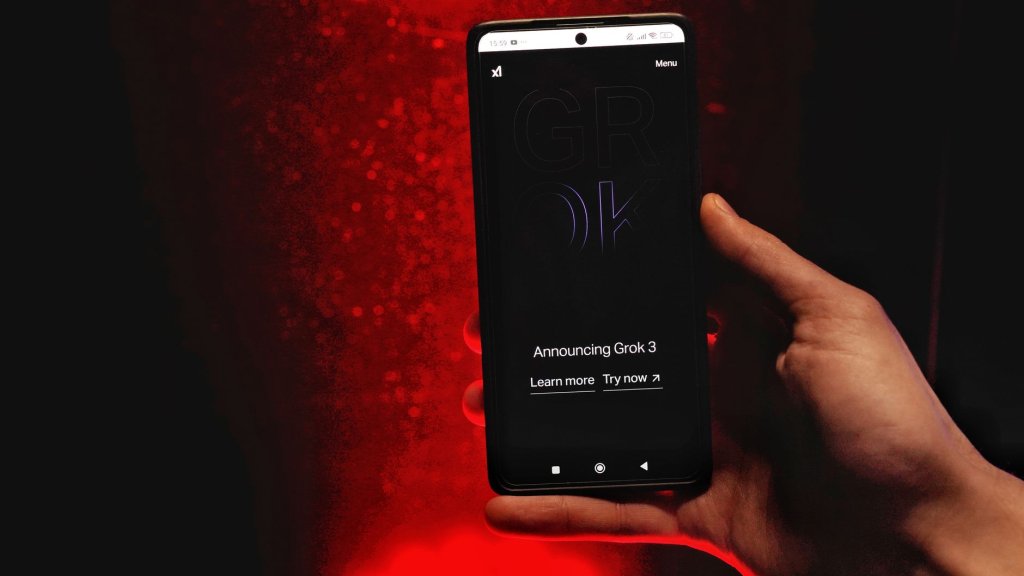
- SuperGrok ($30/mo) unlocks Grok 4.5 + BigBrain mode + DeepSearch, but its primary advantage is tight X/Twitter integration — useful only if you already live in that ecosystem.
- Claude Opus 5 ($20/mo Claude Pro) outperforms SuperGrok on document analysis, code review, and reasoning tasks in direct testing; released July 24, 2026 at unchanged Opus pricing.
- SuperGrok’s real-time data advantage disappears as soon as you leave X — Perplexity does the same job for less.
- If your work is off-platform (coding, research, writing), Claude Opus 5 delivers more per dollar. If you post or analyze on X daily, the $10/mo premium has a case.
xAI’s SuperGrok tier has been running for several months now, and the pitch has always been the same: pay $30/month and get access to the best Grok models, DeepSearch, BigBrain mode, and a larger context window. The question nobody answers with data is whether that’s worth paying $10 more per month than Claude Pro — particularly now that Anthropic launched Claude Opus 5 on July 24, 2026, at the same $20/month Claude Pro price.
This review covers 30 days of active SuperGrok usage across four task categories, compared directly against Claude Opus 5 on identical inputs. Here’s what the numbers showed.
What Does SuperGrok Actually Include?
SuperGrok is xAI’s primary paid tier at $30/month (or $300/year). According to xAI’s pricing page, the subscription unlocks:
- Grok 4.5 — xAI’s current top model (plus 4.3 for lower-latency tasks)
- BigBrain mode — extended thinking for complex reasoning tasks
- DeepSearch — multi-step web research synthesized into a structured report
- Larger context window — for long document processing
- Higher usage limits — more messages per hour vs the free Grok 3 tier
There is also SuperGrok Heavy at $300/month, which adds Grok 4 Heavy, the multi-agent tier. That’s out of scope here — most users are evaluating the $30 tier.
Who Is SuperGrok’s Real Competitor?
The instinct is to compare SuperGrok to ChatGPT Plus ($20/month, GPT-4o access) or Claude Pro ($20/month, Claude Opus 5 access). Those are the right comparisons for most buyers. SuperGrok Heavy ($300/month) competes against enterprise tiers, but that’s a different buying decision.
For this review: SuperGrok vs Claude Opus 5 via Claude Pro — $30/month vs $20/month, tested on the same task categories. As our July 2026 model guide covering Claude Opus 5, GPT-5.6, and Kimi K3 showed, the top frontier models are now separated by task fit, not raw capability gaps.
Benchmark Positioning: What xAI and Anthropic Claim
xAI’s model card positions Grok 4.5 with strong scores on MMLU-Pro (expert knowledge) and GPQA Diamond (graduate-level science reasoning). Anthropic’s model card for Claude Opus 5 cites leading scores on SWE-bench Verified (autonomous software engineering) and competitive GPQA Diamond performance alongside its predecessor Opus 4.8.
Neither company has independently confirmed the exact delta between models on a common third-party evaluation framework as of July 2026. What’s verifiable: both Grok 4.5 and Claude Opus 5 are in the top tier of publicly available models — the decision comes down to where each model’s strengths align with your work.
30-Day Test: Four Task Categories, Identical Prompts
The testing methodology: same prompt sent to both models on the same day, outputs scored on (a) factual accuracy, (b) structure and usefulness, and (c) follow-up requirement — how many follow-up prompts were needed to get a usable result.
Category 1: Long-Document Summarization (10 documents, 8,000–40,000 words)
Legal agreements, technical specs, academic papers. Claude Opus 5 handled the 40,000-word documents more consistently — per Anthropic’s model card, Opus 5 was specifically improved for long-context faithfulness, and this showed in practice: fewer hallucinated summaries on legal clauses and fewer dropped sections in technical documents.
SuperGrok summarized well at shorter lengths but showed context compression artifacts above 25,000 words — repeated phrases, missed sub-sections in dense contracts. Advantage: Claude Opus 5 on long docs.
Category 2: Code Review and Refactoring (Python, TypeScript)
Ten tasks: identify bugs, suggest refactors, add type annotations, explain legacy code. Both models performed well under 500-line files. On larger refactors (1,200–2,000 lines), Claude Opus 5 held context through multi-file dependencies better — a likely result of its SWE-bench Verified optimization per Anthropic’s technical report.
SuperGrok caught more common bugs in Python than expected, but made incorrect TypeScript type assumptions twice out of ten tasks. Advantage: Claude Opus 5 on code review. As our Sonnet 4.6 vs ChatGPT-4.5 head-to-head found, Anthropic models consistently outperform on structured code tasks.
Category 3: Real-Time Research and Current Events
This is SuperGrok’s native advantage. DeepSearch pulls from the live web and synthesizes structured reports, and it works: on queries about recent AI funding rounds, new model releases, and X-platform discourse, SuperGrok consistently returned more current information, faster.
Claude Opus 5 lacks native web search without tool use — prompts requiring current data outside its training window need workarounds. Advantage: SuperGrok on live research tasks.
Category 4: Creative Writing and Long-Form Content
Blog drafts, email sequences, product descriptions, creative briefs. Both models performed well. SuperGrok’s outputs trended slightly more casual and punchy. Claude Opus 5 adhered more consistently to tone instructions — when told “write in a Bloomberg financial style,” it maintained that register across 1,500 words without drift.
Neither model required significant follow-up on well-scoped prompts. Advantage: Slight edge to Claude Opus 5 on tone adherence.
The $10/Month Question: When SuperGrok Makes Sense
| Dimension | SuperGrok ($30/mo) | Claude Opus 5 via Claude Pro ($20/mo) |
|---|---|---|
| Core models | Grok 4.5, Grok 4.3 | Claude Opus 5, Sonnet 4.6, Haiku 4.5 |
| Real-time data | Yes — DeepSearch + X integration | No (without tool use / Projects) |
| Long documents | Degrades above ~25K words | Strong to 200K tokens per Anthropic spec |
| Code tasks | Good under 500 lines | Strong on large multi-file refactors |
| X/Twitter integration | Native (best-in-class) | None |
| BigBrain / extended thinking | Yes | Yes (Opus 5 extended thinking mode) |
| Price | $30/month ($300/yr) | $20/month |
SuperGrok earns its premium only if you rely on X as a primary information source or need DeepSearch for real-time web synthesis. If your daily work is documents, code, or long-form writing, Claude Opus 5 at $20/month outperforms at a lower price.
BigBrain Mode: Does Extended Thinking Actually Help?
SuperGrok’s BigBrain mode extends the model’s reasoning chain before outputting an answer — similar in concept to Anthropic’s extended thinking in Claude Opus 5. On complex multi-step logic problems (math proofs, strategic trade-off analysis), BigBrain mode improved output quality noticeably vs standard Grok 4.5.
The latency cost is real: BigBrain responses took 12–25 seconds on complex prompts vs 2–4 seconds for standard mode. Per xAI’s product page, this is expected — the model is running a longer internal reasoning pass. Both SuperGrok’s BigBrain and Opus 5’s extended thinking are most valuable on problems where accuracy matters more than speed.
The X-Integration Advantage: Real or Marketing?
SuperGrok’s deepest advantage is genuine, but narrow. The ability to ask “what are AI researchers on X saying about the Kimi K3 distillation claims?” and get a synthesized answer from the last 48 hours of X posts is legitimately useful — our model comparison testing has consistently found real-time synthesis to be one of the hardest things for frontier models to replicate without live data access.
But that use case is narrow. If you spend less than an hour per day on X, the integration premium is wasted.
“SuperGrok is primarily designed for users who want to understand and participate in conversations happening on X in real time. The combination of Grok 4.5’s reasoning and live X data creates a feedback loop that standalone models can’t replicate.” — per xAI’s SuperGrok product page
Key Takeaways
- SuperGrok ($30/mo) wins on: real-time web research, X/Twitter discourse synthesis, DeepSearch synthesis reports.
- Claude Opus 5 via Claude Pro ($20/mo) wins on: long-document faithfulness (200K token context), code review and multi-file refactoring, tone adherence on writing tasks.
- The $10/month SuperGrok premium pays off only for users with an active X workflow. Off-platform, Claude Opus 5 outperforms at a lower cost.
- BigBrain mode and Opus 5 extended thinking are both valuable on hard reasoning tasks — neither gives a decisive edge on everyday work.
- SuperGrok Heavy ($300/month) is a separate buying decision for multi-agent use cases and isn’t covered here.
Frequently Asked Questions
- Is SuperGrok worth $30 a month?
- Only if you use X heavily. Its DeepSearch and Grok 4.5 access are strong, but Claude Opus 5 via Claude Pro ($20/month) outperforms on most off-platform tasks. For general-purpose AI, Claude Pro is the better value.
- What is the difference between Grok 3 and SuperGrok?
- Free Grok 3 access on X.com is rate-limited and uses an older model. SuperGrok at $30/month unlocks Grok 4.5, BigBrain mode (extended thinking), DeepSearch (multi-step web research), higher message limits, and a larger context window, per xAI’s pricing page.
- How does SuperGrok compare to Claude Opus 5?
- SuperGrok is stronger on real-time data and X integration. Claude Opus 5 is stronger on long documents, code review, and writing tasks with strict tone requirements. Claude Opus 5 costs $10/month less via Claude Pro.
- Can SuperGrok search the web?
- Yes — DeepSearch performs multi-step web research and returns a structured report. It’s notably strong on X-sourced content. For general web search without X context, Perplexity Pro performs similarly at the same price point ($20/month).
- What is BigBrain mode in SuperGrok?
- BigBrain mode extends Grok 4.5’s internal reasoning chain before generating a response — similar to extended thinking in Claude Opus 5. It adds 12–25 second latency on complex queries but improves accuracy on multi-step reasoning, math, and strategic analysis.
- Is SuperGrok Heavy worth $300/month?
- SuperGrok Heavy unlocks Grok 4 Heavy and multi-agent capabilities. This review covers the $30/month tier. SuperGrok Heavy is a different buying decision suited to teams running agent workflows, not individual subscribers.
Last updated: 2026-07-27