This week’s infrastructure announcements — all arriving within 48 hours — tell a single story: the compute layer of AI has entered a phase of genuine competition, and the organizations that understand what is changing have a narrow window to act on it. Here is the breakdown, and what it means for your procurement decisions in 2026.
OpenAI’s $750 Billion Commitment: Infrastructure at Country Scale
OpenAI announced Wednesday that it will spend $750 billion on infrastructure through 2030 — a 25% increase from its earlier estimate — according to a report by The Wall Street Journal, confirmed by TechCrunch. The announcement comes as its original Stargate data center project appears to have stalled.
The first major move is Project Camellia: a $20 billion data center campus on 1,400 acres northwest of Savannah, Georgia. The campus will draw at least 3.2 gigawatts of power from Georgia Power, with that capacity expected to come online between 2028 and 2032. OpenAI has agreed to cover the full cost of infrastructure and electric service, per TechCrunch. It also secured a 50% property tax abatement for 15 years from Effingham County, per the Effingham Herald.
The deal accounts for roughly one-third of the 9,885 megawatts of additional generating capacity that Georgia Power received PSC approval to build in December, with Georgia Power expecting all of it contracted by end of 2026.
The operational implication: OpenAI is building grid-scale power infrastructure that happens to run AI. When the next generation of models requires compute that current data centers cannot supply, OpenAI will have a structural cost advantage over any competitor relying on third-party cloud. Teams dependent on OpenAI APIs in 2028 will be pricing against infrastructure that was committed in 2026.
AMD Helios: The First Serious Challenger to Nvidia’s Rack-Scale Monopoly
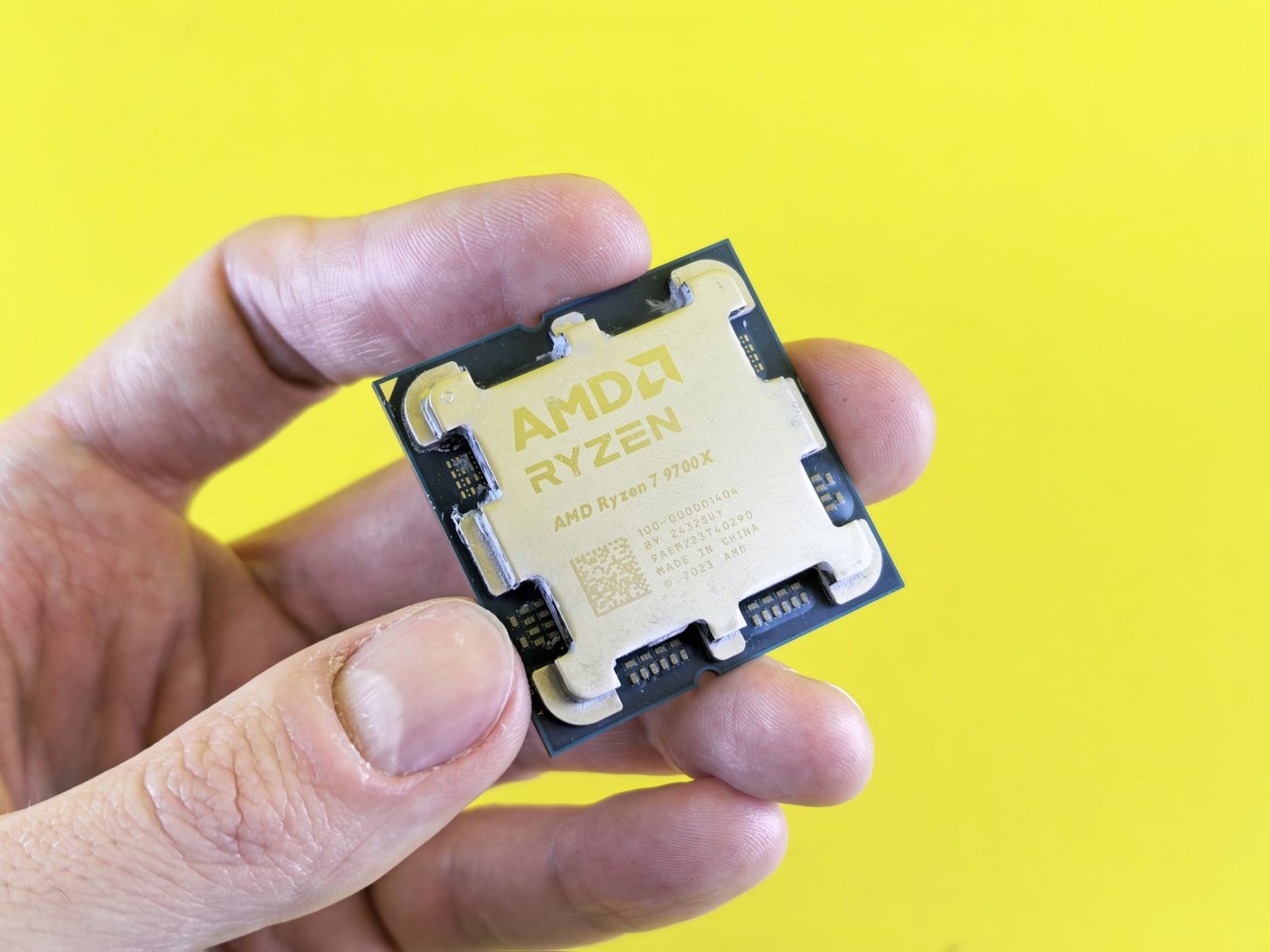
At its sold-out Advancing AI conference in San Francisco on July 23, AMD Chair and CEO Dr. Lisa Su unveiled Helios, a rack-scale AI system designed to compete directly with Nvidia’s Vera Rubin and Grace Blackwell platforms, according to TechCrunch. AMD claims Helios beats Vera Rubin across several performance metrics — a comparison covered by The Register from the conference floor.
Helios already has a customer list that covers the industry’s biggest buyers: OpenAI, Meta, Oracle, Anthropic, and Microsoft. Microsoft CEO Satya Nadella announced Monday that Azure would expand its infrastructure with Helios deployments. Anthropic and AMD announced a separate strategic partnership Wednesday to deploy up to two gigawatts of GPUs via the Helios system. AMD also introduced the Venice-X CPU, targeting data center high-compute workloads, with a planned 2027 launch.
AMD’s combined Helios and Venice-X roadmap positions it as a full-stack infrastructure provider, competing with Nvidia’s end-to-end platform rather than just selling chips. The customer list is not speculative — these are companies with signed deployment agreements.
The practical shift for procurement teams: AMD Helios with Anthropic and Microsoft as anchor customers creates a credible alternative in rack-scale negotiations. If you are buying at enterprise GPU scale, including Helios in your RFP process is now defensible. Nvidia knows this. Use it in your next renewal conversation.
Etched at $10.3 Billion: The Bet That Inference-Specialized Silicon Wins
Etched, the AI chip startup founded by three Harvard dropouts in 2022, closed a $300 million Series C this week at a $10.3 billion valuation, according to co-founder and COO Robert Wachen in an interview with TechCrunch. The round was led by Sequoia, with Andreessen Horowitz, SK Hynix, Jane Street, and Diffusion Capital also participating. Notable individual backers include Peter Thiel, Andrej Karpathy, Dylan Field, and Amjad Masad.
Etched was valued at $5 billion in December when it raised a $500 million round, meaning it doubled its valuation in about seven months. Sequoia says this is the highest valuation it has led for a Series C. Before the round closed, the company had already booked $1 billion in orders and confirmed its first full systems were being tested by clients.
Etched built its chips to accelerate inference specifically — the step where a trained model generates outputs — rather than training. Wachen pushed back on the “single-purpose chip” criticism: the systems run any architecture, including Mixture of Experts models like DeepSeek and Qwen, and non-transformer designs like Mamba state-space models. The market timing is notable: Google is reportedly pursuing a related concept with its Frozen v2 chip, designed to bake Gemini model properties directly into silicon. An idea dismissed two years ago has become a multi-billion dollar competitive race.
For teams running self-hosted models at scale — thousands of requests per second, latency-critical workloads — Etched’s approach is worth tracking concretely. The $1 billion order book means early enterprise adopters have already committed. For context on why inference performance degrades at scale and what drives the cost profile, our deep-dive on KV cache behavior in LLM applications covers the mechanics relevant to evaluating new silicon.
Google Cloud’s $24.8 Billion Quarter: The Invoice That Justifies the Spending
The argument for massive AI infrastructure investment has always depended on one assumption: that enterprises will actually pay for it. Google’s Q2 2026 earnings report, released Wednesday, is the strongest single-quarter data point yet that the assumption is correct.
Google Cloud revenue reached $24.8 billion for the quarter, an 82% year-over-year increase, per the company’s earnings release. The previous quarter came in at $20 billion (63% YoY growth), which already beat Wall Street expectations. This quarter’s result exceeded analyst consensus of $22.46 billion by more than $2 billion. Google’s cloud contracting backlog — signed contracts not yet converted to revenue — stands at $514 billion.
The broader numbers: Alphabet’s overall revenue grew 24% YoY to $119.8 billion. Company profit hit $112.1 billion, compared to $28.1 billion in the same period last year. CEO Sundar Pichai attributed cloud growth to “enterprise AI solutions and enterprise AI infrastructure adoption.” Google’s Gemini chatbot grew from 750 million monthly active users in Q4 2025 to 950 million this quarter. This is Google’s 12th consecutive quarter of double-digit revenue growth — but 82% cloud growth is not momentum from existing business. It is a new demand curve.
The $514 billion backlog is a pricing signal for cloud customers. Enterprises signing multiyear AI compute contracts ahead of capacity constraints are driving that number. If your team is still running production AI workloads on pay-as-you-go GPU instances, you are competing against organizations that have locked in reserved capacity. The question is not whether reserved pricing looks expensive in a spreadsheet — it is whether you can get the capacity you need at spot pricing in 2027.
Nvidia on the Lunar Surface: Market Dominance Has No Ceiling
AMD, Etched, and Google’s ambitions exist inside a market that Nvidia still dominates so thoroughly that its chips are heading to the moon. Lunar Outpost, a startup building robotics for space infrastructure, announced this week that its next moon rover will use Nvidia Jetson chips to control its lidar system, according to TechCrunch. When deployed, it would be the first GPU on the lunar surface.
“We’re pushing towards trying to adopt these more capable GPU-powered systems in these extreme environments,” said Lunar Outpost CEO Justin Cyrus, speaking about the NASA-connected mission.
The announcement is not a revenue event for Nvidia. It is a demonstration of reach: Nvidia’s architecture now spans from frontier AI training clusters at gigawatt scale to autonomous systems operating with no atmosphere and no backup power. That breadth makes switching costs real. Every organization that has built operational expertise in CUDA, every engineer who knows the CUDA toolchain, every model that was optimized for Nvidia’s memory hierarchy — that institutional knowledge does not transfer to AMD or Etched without cost. This is why AMD’s customer list matters: Microsoft and Anthropic choosing Helios is the proof that switching costs can be overcome at scale, given sufficient performance delta.
What This Means for Your Team
Five concrete implications from this week’s infrastructure consolidation:
1. Use AMD’s customer list in your next GPU negotiation
Anthropic, Microsoft, and OpenAI deploying Helios gives you something to name in competitive negotiations with your current cloud provider. Rack-scale vendors price on market position. That position just changed.
2. Start tracking inference cost per token now
Etched’s $1 billion order book means purpose-built inference silicon will reach production scale within 18-24 months. Teams that have a baseline on their current inference cost per token will be positioned to evaluate the switch; teams that do not will be negotiating blind. This applies whether you are on managed APIs or self-hosted models.
3. Google Cloud’s backlog is a capacity warning
A $514 billion contracting backlog means demand is being pulled forward. If your team has a cloud AI contract renewal coming in the next six months, consider whether reserved capacity pricing makes sense before the next capacity constraint cycle.
4. OpenAI’s 2028-2032 infrastructure timeline is an API dependency risk
Project Camellia’s generating capacity does not come online until 2028-2032. OpenAI is building for a future model generation on infrastructure that is still years from delivery. Teams building production systems on OpenAI APIs should include infrastructure availability as a risk factor in their 2027-2028 architectural planning. Our July 2026 model comparison covering Claude Opus 5, GPT-5.6, and Kimi K3 gives you the current model performance baseline to pair with infrastructure planning.
5. The AI infrastructure funding environment is accelerating, not cooling
Etched at $10.3 billion, OpenAI at $750 billion, AMD deploying gigawatt-scale partnerships — the infrastructure layer is where capital is concentrating in mid-2026. For anyone evaluating AI vendors, infrastructure backing is now a relevant factor in vendor stability assessments alongside product roadmap and support. We tracked the early signals of this consolidation in the March 2026 AI funding roundup. The July data confirms the trend at a different order of magnitude.
The One Action This Week
If your team has a GPU procurement or cloud AI contract coming up for renewal in the next 90 days: request competitive quotes that include AMD Helios-based options. You may not switch — Nvidia’s ecosystem advantages are real — but the negotiation leverage from a credible alternative is worth the conversation. The AI infrastructure market had one dominant vendor for three years. It now has challengers with billion-dollar order books and the same enterprise customers. That changes the negotiating dynamics whether you act on it or not.