Bottom line: OpenAI made three moves in the same week that only look unrelated on the surface. It removed text-chat limits for every ChatGPT tier, including free, at a moment the product has crossed 1 billion weekly users. It let a hardware device from Jony Ive’s design team leak into public view. And it filed a motion to dismiss Apple’s trade-secrets lawsuit that hinges on Apple’s own security failures, not on what OpenAI’s engineers actually did. Read together, this is a company betting that distribution scale, a new hardware surface, and freedom to hire from rivals matter more right now than any single model benchmark.
OpenAI Removes ChatGPT’s Text-Chat Limits for Every Tier
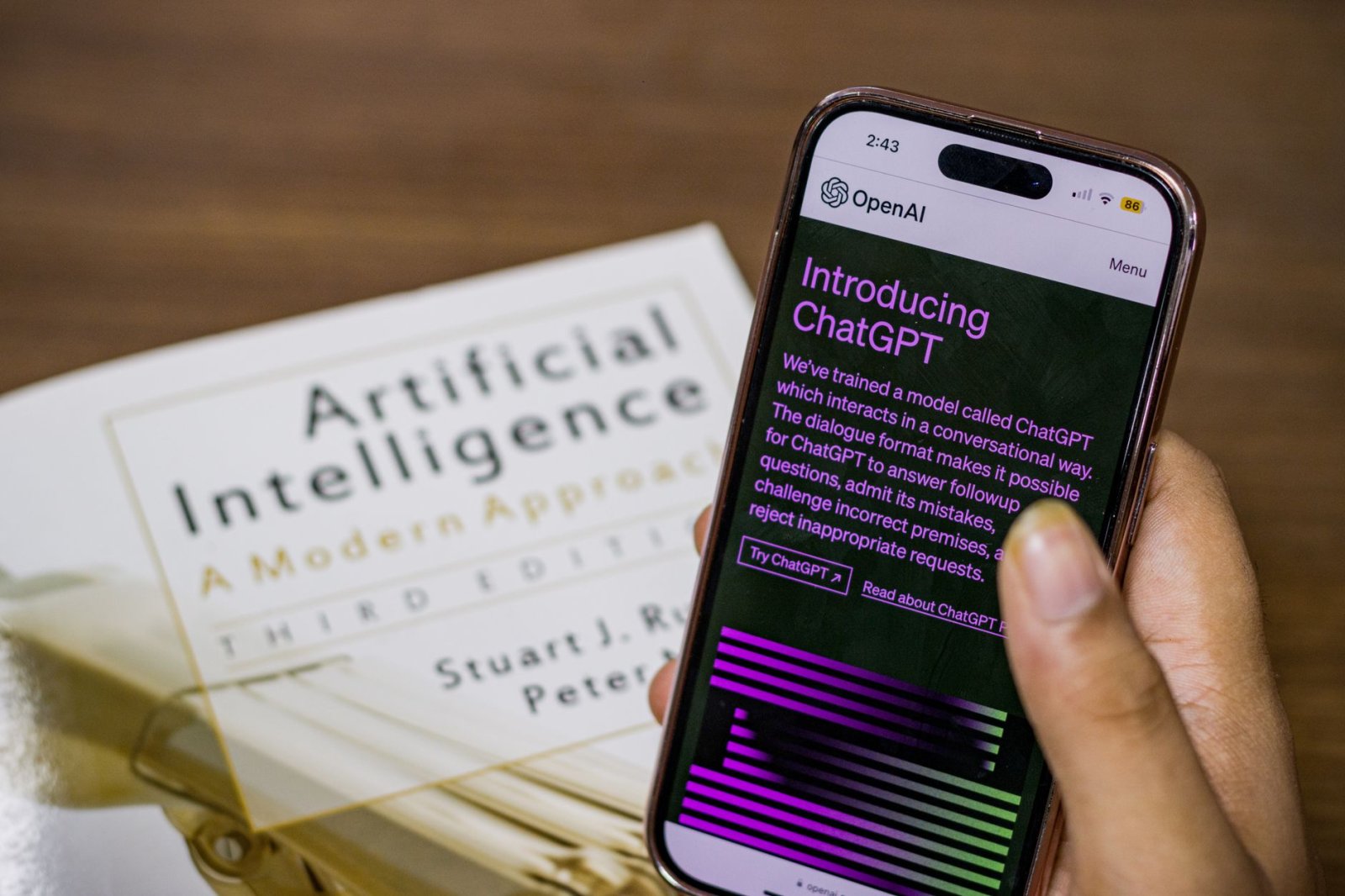
OpenAI is eliminating text-message rate limits across ChatGPT’s Free, Go, Plus, and Pro tiers, according to The Verge. The change lands as ChatGPT has crossed 1 billion weekly users, TechCrunch reported, citing OpenAI’s own announcement.
Free and Go users will be moved to a new default model, GPT-5.6 Luna, replacing GPT-5.5. Plus and Pro users get an upgraded GPT-5.6 Sol, tuned for quick tasks — questions, web research, advice, planning, writing, and decisions — that OpenAI says returns more compact, robust answers. Notably, this is a distinct build from the GPT-5.6 Sol variant used inside Codex and OpenAI’s Work product, which is unchanged, per TechCrunch’s reporting.
Both free and paid tiers are also getting reasoning controls: a “Think” button for Free and Go users to request higher reasoning effort on complex questions, and a thinking slider for Plus and Pro users to tune reasoning depth against latency. File uploads, image generation, and voice still carry separate limits — the unlimited change is text-only.
OpenAI’s internal evaluation found factual errors were 62% less common on GPT-5.6 Luna and 68% less common on GPT-5.6 Sol, compared to the outgoing GPT-5.5-Instant model, per TechCrunch’s report on the announcement.
The rollout is staggered: the upgraded GPT-5.6 Sol is live for Plus and Pro users now, the rest of the Free and Go changes arrive this week, and unlimited text chats plus the Think button reach everyone next week.
Why Remove Limits Now
Rate limits on a free tier exist for one reason: cost control. Removing them on a product already serving over a billion weekly users is an expensive signal — it tells the market that inference cost per query has dropped enough, or that user-acquisition pressure from Gemini and Claude-based consumer products has risen enough, that OpenAI would rather absorb the compute bill than lose free-tier users to a competitor with a more generous limit. Pair that with the internal factual-error numbers OpenAI chose to publish, and the message compounds: not just more usage, but usage OpenAI is willing to claim is more trustworthy than what came before.
Jony Ive’s First OpenAI Hardware Product Surfaces
Separately, the first hardware device from Jony Ive’s design team at OpenAI has reportedly taken shape as a “doughnut-shaped,” hockey-puck-sized smart speaker that could cost more than $300 at launch next year, The Verge reported, citing Bloomberg.
OpenAI acquired Ive’s device startup io in 2025 in a deal reported at roughly $6.5 billion, and the company has been notably quiet on specifics since. A hockey-puck-sized speaker priced above $300 places the device closer to a premium smart speaker or dedicated AI companion object than a phone replacement — a materially smaller ambition than the “AI-native device that replaces your phone” framing that circulated when the io deal was announced, but a shippable one for a 2027 target.
Why a Hardware Bet Matters Alongside a Distribution Push
A free-tier unlock grows OpenAI’s software distribution inside phones, browsers, and existing apps. A hardware device is a bet on owning the interaction layer itself — a physical object with a persistent presence, unlike an app that competes for a home-screen slot against Gemini, Claude, and every other assistant a phone maker preloads. The two moves aren’t redundant; they’re distribution on two different surfaces at once, aimed at the same underlying goal: make ChatGPT (or whatever the hardware product ends up being called) the default way people talk to an AI model, regardless of which device they’re holding.
OpenAI’s Defense in the Apple Trade-Secrets Lawsuit
The third front is legal. Apple filed suit in July accusing OpenAI of orchestrating a scheme to obtain confidential Apple hardware information through former Apple engineers now at OpenAI. This week, OpenAI filed a motion to dismiss along with supporting exhibits that lay out its defense strategy, and Apple separately asked the court to expedite discovery, saying its internal investigation suggests additional former employees may have participated in or witnessed the alleged theft, according to TechCrunch.
OpenAI’s motion does not primarily dispute what its engineers accessed. Instead, it argues that Apple’s own security and offboarding practices undercut Apple’s claim that the information qualifies as a legally protected trade secret in the first place. The filing states that Apple allowed employees to use personal iCloud accounts for work and failed to properly revoke access after those employees left the company. As one specific exhibit, OpenAI submitted text message records showing an Apple manager remained logged into the personal iCloud account of former Apple engineer Chang Liu — a named defendant in the case — after Liu had already left the company, using that access to transfer files and later asking Liu for help with technical questions about Apple projects, per TechCrunch’s review of the court filing.
Watch out: The defense OpenAI is running — essentially, “your own access controls were broken, so the information was never properly secured” — is a real legal strategy with a real precedent risk for any company that treats trade-secret status as automatic rather than something maintained through active access hygiene. Courts do weigh whether an alleged trade-secret holder took reasonable steps to protect the information; sloppy offboarding is exactly the kind of fact pattern that can undercut a claim.
What Connects All Three Stories

None of these three moves change OpenAI’s underlying model capability. What they change is OpenAI’s exposure on the fronts that decide who wins the next phase of the AI assistant market: free-tier reach, a hardware presence independent of any other company’s device, and the ability to keep hiring engineers away from rivals without a court injunction stopping it. Read individually, each is a product update, a leak, and a court filing. Read together, they describe a company spending this week defending and extending distribution rather than racing on a benchmark leaderboard — a posture that matters more once model quality between frontier labs narrows, as it has been. Our Claude Opus 5 vs. GPT-5.6 vs. Kimi K3 comparison found the gap between frontier models on real tasks has been shrinking for months, which is precisely the environment where distribution, not raw capability, becomes the deciding factor.
What This Means for You
If you build on the OpenAI API or ChatGPT ecosystem: GPT-5.6 Luna and GPT-5.6 Sol are meaningfully different models from GPT-5.5, not just a version bump — the claimed 62-68% drop in factual errors is worth validating against your own eval set before assuming existing prompts and guardrails still hold. If your product relies on ChatGPT’s free-tier rate limits as an implicit cost ceiling for your users, that ceiling is going away next week.
If you’re evaluating AI vendors for cost or reliability reasons: unlimited free text access is a real competitive pressure point against any product charging for basic chat access. Compare what you’re paying against the free tier’s new capability floor before renewing. For teams already committed to a paid frontier API, our Claude API for Business cost breakdown is a useful baseline for what you should be getting for the price.
If you run engineering teams with departing employees who had cloud or system access: this is the actual operator-grade lesson in the Apple filing, independent of who wins the lawsuit. Apple — a company with some of the most mature security practices in the industry — reportedly left a former engineer’s personal iCloud account logged in and accessible after departure, and a manager used that access. Audit your own offboarding checklist this week: personal-device access, iCloud/Google account separation from work accounts, and confirmation that access revocation actually completed rather than was merely requested. A trade-secrets claim — or a much more mundane data leak — is only as strong as the access controls behind it.
For more on how the frontier labs’ competitive and infrastructure moves are shaping API pricing and reliability, see our coverage of Anthropic’s $10B Volta deal and new chip team.
Sources: The Verge, TechCrunch. Last updated: 2026-08-07.